Plastics for Vegetables in Guanajuato: Bajío Guide
Which agricultural plastic to use on Bajío vegetables: mulch film by color and season, greenhouse ground cover and hydroponic grow bags.
The short answer
In the Bajío of Guanajuato, agricultural mulch film works for open-field vegetables, greenhouse ground cover for protected agriculture and hydroponic grow bags for soilless crops. The choice depends on the crop, the season and the cold or heat the root faces. Here you will see when each plastic makes sense and which color to choose.
What you need to know
- Mulch film is chosen by color: black/black warms the soil, black/white cools it and green/green is recommended for strawberry, according to ICUSA's technical data sheet.
- Greenhouse ground cover protects against dust and weeds, and makes pruning, defoliating and harvesting more hygienic.
- The hydroponic grow bag comes in white/black to reduce temperature and in black/black to add heat.
- The perforation follows the spacing between plants, and the gauge is adjusted to how long the film must last.
- A technical advisor can make a recommendation based on crop, planting date and type of farm.
In this article
- What Bajío conditions define the plastic you need?
- When does agricultural mulch film make sense for Guanajuato vegetables?
- What is greenhouse ground cover for in the Bajío?
- When does the hydroponic grow bag make sense?
- Which plastic goes with which crop and season?
- What should you check before asking for a quote?
What Bajío conditions define the plastic you need?
The Bajío of Guanajuato produces vegetables nearly year-round: broccoli, lettuce, onion, garlic, asparagus, carrot, chile, tomato and strawberry, among others. That variety coexists with a climate of cool winter nights, occasional frost in the higher areas and strong heat toward spring. In addition, much of the irrigation depends on groundwater, a resource that costs more to protect each cycle.
That is why plastic is not chosen by fashion, but by three questions: what temperature the root needs, how much water can be lost to evaporation and how much weed and pest control is required. From there come the three ICUSA solutions that make the most sense in the region: agricultural mulch film in open fields, greenhouse ground cover in protected agriculture and hydroponic grow bags in soilless crops.
When does agricultural mulch film make sense for Guanajuato vegetables?
Mulch film covers the planting bed and modifies the microclimate around the plant. Our technical data sheet says it makes water and nutrient use more efficient, controls weeds and pests and modifies soil temperature. It makes the most sense in long-cycle or high-value vegetables, where drip tape irrigation is already installed and you want to make the most of every liter.
Which mulch film color goes with each season?
Color decides whether the soil warms up or cools down. This guide summarizes what the technical data sheet says and how it typically fits in the Bajío:
| Color | What it does according to the technical data sheet | Where it fits in the Bajío |
|---|---|---|
| Black/Black | Controls weeds, raises temperature in the root zone and speeds up harvest | Fall and winter plantings and cycle starts with cold soil |
| Black/White | Reflects light and reduces soil heating; recommended with high radiation and high temperatures | Spring and summer cycles, when the heat gets intense |
| Black/Silver | Reflects light and helps repel pests and disease vectors | Crops where aphids, whitefly or viruses are a concern |
| Green/Green | Warms the soil around the root; the data sheet recommends it for strawberry | Strawberry |
If your farm has fields with different exposure or altitude, it is not unusual for one color to suit the cold field and another the warm one. A technical advisor can help you decide based on your planting calendar.
Which perforation and gauge should you choose?
Our technical data sheet mentions center, staggered (tres bolillos), domino, three-row and multi-perforated patterns, plus custom pre-perforations. The spacing between plants of your crop sets the perforation. Mulch film comes in gauges from 70 to 200, and the gauge depends on how long the film must last and whether it will be lifted with machinery at the end of the cycle. A maximum lifespan of up to 2 years is stated, depending on crop, gauge and use. For single-cycle crops, there is no need to pay for durability you will not use.
What mistakes should you avoid when laying mulch film?
Almost all field problems come from the laying, not from the film. Laying over a well-formed, firm bed with the right moisture helps the plastic fit tightly and stay down in the wind. A film that is too tight tears at the perforation, and one that is too loose moves with the gusts. If you use drip tape, place it before covering. At the end of the cycle, removing all the plastic prevents leftovers from staying in the field for the next crop.
What is greenhouse ground cover for in the Bajío?
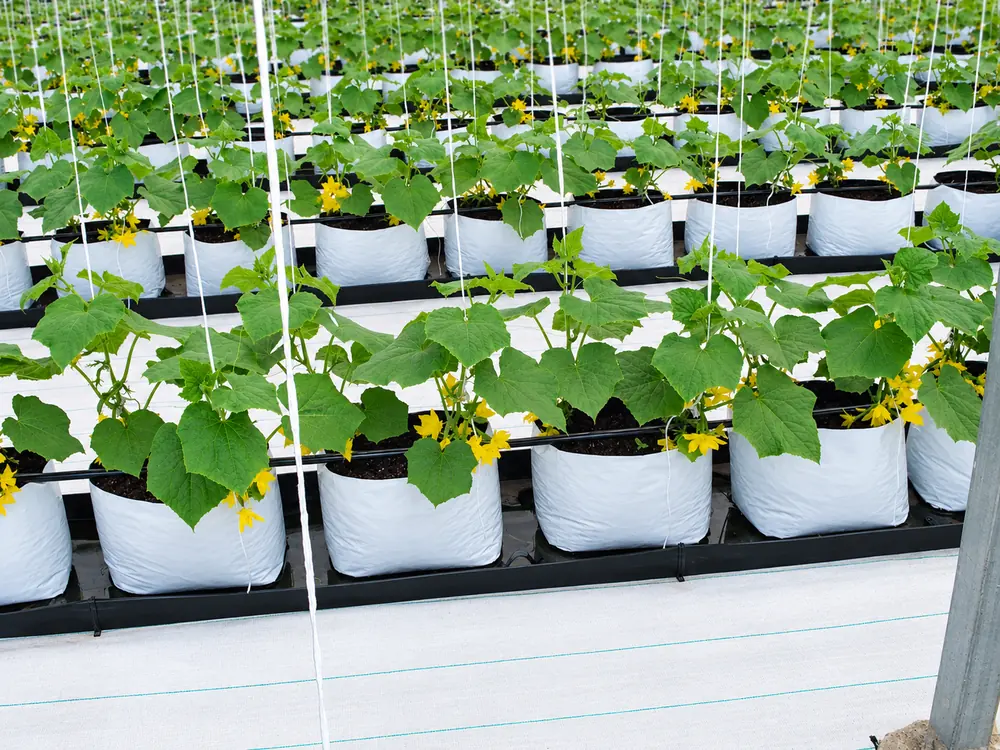
In tomato, bell pepper or cucumber greenhouses, the space between rows is usually exposed soil: it raises dust, lets weeds grow and makes cleaning harder. Greenhouse ground cover is a plastic covering for those aisles, protects the crop from dust, prevents weed growth, makes phytosanitary control easier when pruning, defoliating or harvesting, and reflects solar radiation toward the foliage, which supports photosynthesis.
In a region with a lot of wind and dust storms in spring, dust on the leaf is a real problem, and the ground cover makes daily work cleaner and more hygienic. It combines well with a greenhouse cover with anti-dust treatment.
When does the hydroponic grow bag make sense?
The hydroponic grow bag is the container where the plant grows without soil, in a pot or pillow format. The technical data sheet describes it as an option that is easy to handle and store, lower in cost than other containers, that makes disinfection easier when reusing the substrate and gives more control over pests, diseases, water and nutrients.
There are two colors. The white/black bag reflects sunlight and helps lower temperature. The black/black absorbs more heat and raises the temperature around it. In the Bajío, the white/black makes sense for hot cycles, and the black/black for cold months or unheated greenhouses.
Which plastic goes with which crop and season?
| Growing system | ICUSA product | Season where it matters most |
|---|---|---|
| Open-field vegetables with drip tape irrigation | Agricultural mulch film | Year-round; the color changes with the season |
| Tomato, bell pepper or cucumber in a greenhouse | Greenhouse ground cover | Spring, for dust and heat; winter, for hygiene |
| Crop in substrate, pot or pillow | Hydroponic grow bag | Long cycles in protected agriculture |
| Strawberry | Green/green mulch film | Fall-to-spring cycle |
What should you check before asking for a quote?
So the advisor can recommend well, have these details at hand: crop and spacing between plants, planting date, bed width, whether you use machinery to lay and lift the film, and whether the farm is open field or greenhouse. It is also worth reviewing the usage recommendations and the warranty and replacement policy before deciding.
If you want to compare with other regions, the guide to agricultural plastics by state covers the essentials. And if your Guanajuato production includes protected agriculture, you will find it useful to read about greenhouses and macro tunnels in Jalisco and about the use of blue and yellow chromatic traps. If you grow in Guanajuato, ICUSA serves you directly from its plant in Culiacán: write through the contact page and an advisor will reply.
Products mentioned
Frequently asked questions
Which mulch film suits vegetables in the Bajío?
It depends on the season. According to ICUSA's technical data sheet, black/black raises temperature at the root and usually goes in cold plantings, while black/white reflects light and reduces soil heating in hot cycles. For strawberry, green/green is recommended.
How long does agricultural mulch film last?
ICUSA states a maximum lifespan of up to 2 years, depending on crop, gauge and use. For a single-cycle crop, you do not need to choose maximum durability. Your advisor helps you match the gauge to the real cycle.
Is greenhouse ground cover only for weed control?
No. According to the technical data sheet, it also protects the crop from dust, improves cleanliness and hygiene, makes phytosanitary control easier when pruning, defoliating or harvesting, and reflects radiation toward the foliage.
What is the difference between the white/black and black/black hydroponic grow bag?
The white/black reflects sunlight and allows a drop in temperature. The black/black absorbs more heat and raises the temperature around the root. It is chosen according to the season and the greenhouse climate.
Does ICUSA serve Guanajuato?
Yes, ICUSA serves you directly from its plant in Culiacán, Sinaloa, and ships to Guanajuato. You can write through the contact page or on WhatsApp so an advisor can guide you.
Growing in Guanajuato? An advisor will tell you which plastic suits your crop.
Tell us your crop, acreage and planting date. We reply on WhatsApp during office hours.
Keep reading
6 min read
Agricultural Plastics by State: A Guide for Growers
A clear map of which agricultural plastic fits each region of Mexico, from mulch film in Sinaloa to the water reservoir liner in Zacatecas.
Read the guide
6 min read
Agricultural Plastics in Sonora for Extreme Heat
Mulch film, macro tunnel and water reservoir liner: how agricultural plastics are used in Sonora to cope with heat, wind, frost and water scarcity.
Read the guide
6 min read
Water Reservoir Liner in Zacatecas: Capture Rain
How to capture and store rain with a water reservoir liner on rainfed farms in Zacatecas, and why it pairs well with mulch film.
Read the guide