Water Reservoir Liner in Zacatecas: Capture Rain
How to capture and store rain with a water reservoir liner on rainfed farms in Zacatecas, and why it pairs well with mulch film.
The short answer
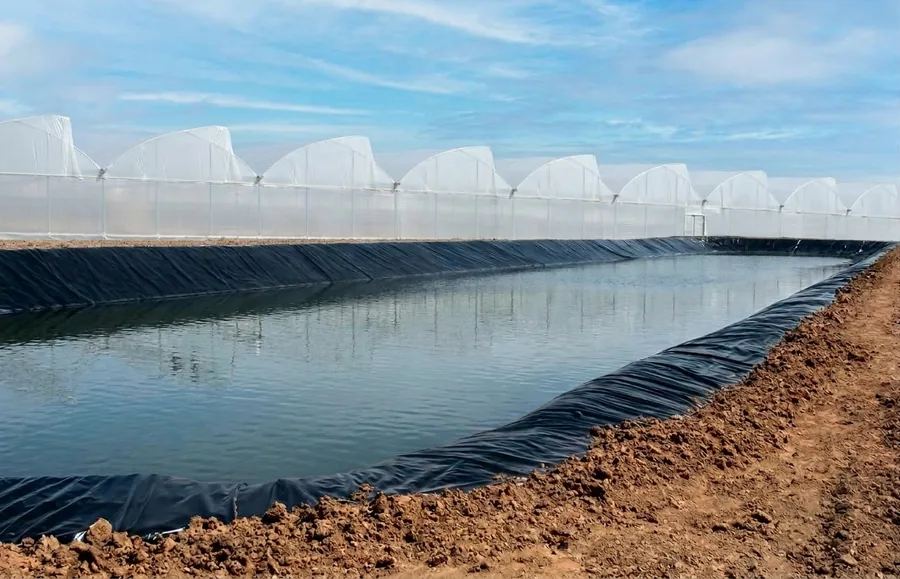
The water reservoir liner is a depression in the ground that captures rain and runoff, stores it and supplies it later. In Zacatecas it makes sense on rainfed farms with slope or runoff, as irrigation backup for chile and other crops. It does not create water: it stores what arrived. It pairs well with mulch film.
What you need to know
- The water reservoir liner captures rainwater and runoff, stores it and supplies it, according to the ICUSA catalog.
- It works as irrigation backup in rainfed farming, not as the only source of water.
- It makes sense where there is slope or marked runoff and a system to apply the stored water.
- Mulch film helps the stored water go further on the bed; black/black is the data sheet's option for temperate or cold climates.
- Before planning the reservoir, walk the farm after a storm.
In this article
Why does a water reservoir liner make sense in Zacatecas?
Zacatecas is a semiarid highland state where rain arrives mostly in summer, with heavy and very irregular storms from one year to the next. A large share of the planted area, with crops such as bean, chile, onion, garlic and forage, depends on rainfall or limited well irrigation. Between the rains and planting there are dry months, and drought in the middle of the cycle is the best-known risk for Zacatecas growers.
That is where the water reservoir liner fits, since these are depressions in the ground, adapted for capturing rainwater and runoff, creating a catchment zone to capture, store and supply water. In other words: take the rain that falls in a few hours and turn it into a volume available for when the plant needs it.
How does a water reservoir liner work on a rainfed farm?
The principle is simple and is understood by following the path of the water:
- Capture. When it rains hard, water runs across the land. The reservoir is placed where that runoff gathers.
- Storage. The depression holds the volume so it is not lost downstream.
- Supply. It is used as supplemental irrigation in a dry period, or to feed a localized irrigation system.
It has to be said clearly: the reservoir does not create water, it only stores what arrived. And it does not replace good land preparation or the choice of crop, although it does give a margin when rain is delayed. This is presented as a solution for making use of runoff in water resource management, with simple integration.
At what times of the year is the lack of water felt most?
The pattern in the highlands repeats: planting starts with dry soil at the end of winter or in spring, the rains settle in toward summer and, in the middle of that season, a period of little rain (the midsummer dry spell, or canícula) is common right when the crop demands the most water. An early frost in the fall can cut the cycle short before harvest. A well-placed reservoir helps precisely in that mid-season gap, with supplemental irrigation that would not otherwise exist.
When does it make sense and when does it not?
| Farm situation | Does a reservoir make sense? | Why |
|---|---|---|
| There is a slope or marked runoff in the rainy season | Yes, worth evaluating | There is water to capture and today it is lost |
| Chile or vegetables that need supplemental irrigation are planted | Yes | Stored water covers critical periods |
| Flat land, no runoff or catchment basin | With reservations | There may be little to store |
| There is no system to draw and distribute the water | Solve irrigation first | Storing water with no way to apply it does not help |
What role does mulch film play in chile and other Zacatecas crops?
If you are going to collect water, it makes sense for it to go further on the bed. Agricultural mulch film is the natural partner of the reservoir. Since it makes water and nutrient use efficient, controls weeds and pests and modifies soil temperature. In Zacatecas, with cold nights and frost risk at the ends of the cycle, the data sheet points to black/black for temperate or cold climates: it raises temperature in the root zone, promotes earliness and controls weeds.
If the crop goes through the full heat of the afternoon, black/white reflects light and reduces soil heating. There is no single color for the whole state, because temperature changes significantly between a low valley and a high plain.
| Mulch film | ICUSA technical data sheet detail | Use in Zacatecas |
|---|---|---|
| Black/Black | Raises root temperature, speeds up harvest and controls weeds | Early plantings or high, cold areas |
| Black/White | Reflects light and reduces soil heating | Low fields or cycles that go through intense heat |
| Black/Silver | Reflects light and repels pests and disease vectors | When there is pressure from insects that transmit viruses |
Mulch film is installed on beds with localized irrigation. If your crop is purely rainfed, with no irrigation system at all, it is worth talking with the advisor first about whether mulch film makes sense or whether the first step is to capture and store water.
What should you check before planning a reservoir?
- Where the water runs. Walk the farm after a storm and mark the water paths.
- How much water you need. Calculate your crop’s supplemental irrigation, not the total irrigation for the cycle.
- The soil. If the ground drains a lot, talk to the advisor about how the depression is prepared.
- How you will use it. Pumping, gravity or filling tanks for drip irrigation.
- Safety. Location, berm and access, especially if people or livestock are nearby.
What comes next if I want a quote?
With the crop, the acreage, the current water source and an idea of where the water runs, the ICUSA advisor can guide you. Also review the usage recommendations and the warranty and replacement policy. If you want the full picture, the guide to agricultural plastics by state compares the regions, and the article on saving water in La Laguna shows how the reservoir is combined with mulch film in another dry region. For vegetables in another part of central Mexico, see plastics for vegetables in Guanajuato.
If you grow in Zacatecas, ICUSA serves you directly from its plant in Culiacán, Sinaloa, and ships to your region. To get a quote, write through the contact page and a technical advisor will reply.
Products mentioned
Frequently asked questions
What is a water reservoir liner?
According to the ICUSA catalog, these are depressions in the ground adapted to capture rainwater and runoff. They create a catchment zone that makes it possible to capture, store and supply water.
Does a water reservoir liner work on a rainfed farm?
It can, if the farm has runoff to capture and there is a way to apply the stored water. It works as backup for supplemental irrigation. If the land is flat and does not drain, you need to evaluate with an advisor how much water could really be stored.
Does the water reservoir liner replace the well?
Not necessarily. The reservoir only stores the water that arrives with rain and runoff, and in a very dry year it may hold little. It is intended as a complement to existing irrigation.
Which mulch film suits chile in cold areas of Zacatecas?
ICUSA's technical data sheet recommends black/black for temperate or cold climates, because it raises temperature in the root zone, promotes earliness and controls weeds. If the field goes through intense heat, black/white reflects light and reduces soil heating.
How much water does a reservoir hold?
It depends on the size of the depression, the catchment area and the year's rainfall. The volume is defined with an advisor based on your farm and the amount of water you need for supplemental irrigation.
Does ICUSA serve Zacatecas?
Yes. ICUSA serves you directly from its plant in Culiacán and ships to Zacatecas. You can write through the contact page or on WhatsApp so an advisor can guide you.
Growing in Zacatecas? An advisor will tell you which plastic suits your crop.
Tell us your crop, acreage and planting date. We reply on WhatsApp during office hours.
Keep reading
6 min read
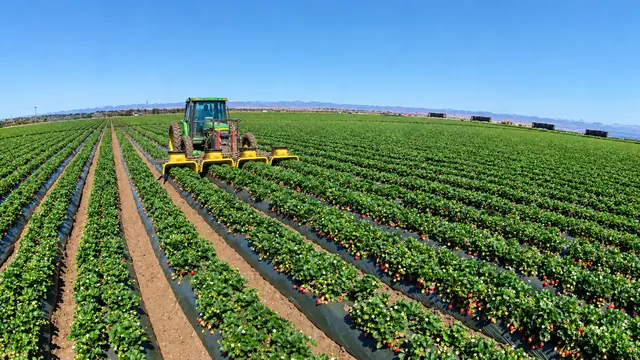
Agricultural Plastics by State: A Guide for Growers
A clear map of which agricultural plastic fits each region of Mexico, from mulch film in Sinaloa to the water reservoir liner in Zacatecas.
Read the guide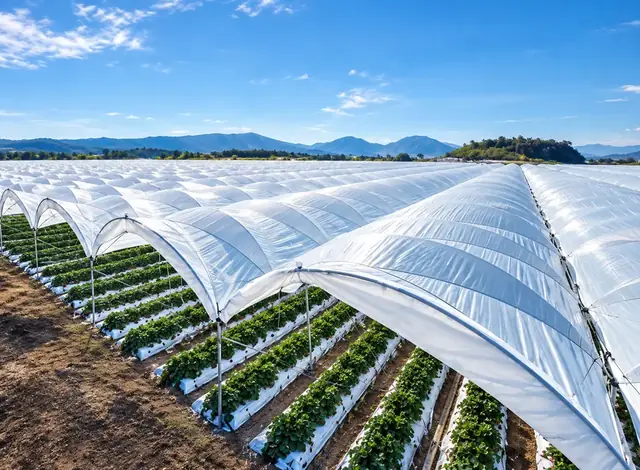
6 min read
Agricultural Plastics in Sonora for Extreme Heat
Mulch film, macro tunnel and water reservoir liner: how agricultural plastics are used in Sonora to cope with heat, wind, frost and water scarcity.
Read the guide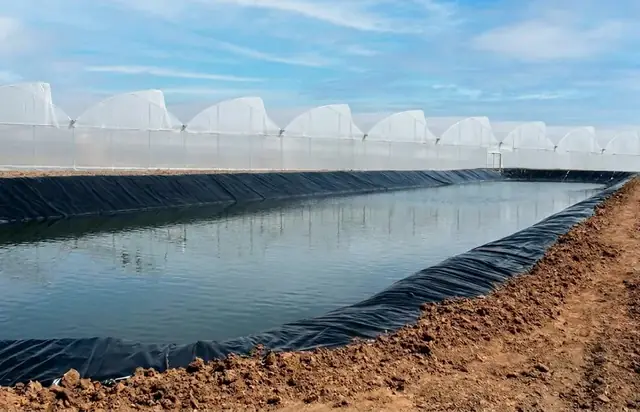
6 min read
La Laguna Water Savings: Mulch Film and Reservoir Liners
Mulch film to protect water in the bed and a water reservoir liner to capture rain: how they work together on melon and watermelon…
Read the guide