Agricultural Plastics in Sonora for Extreme Heat
Mulch film, macro tunnel and water reservoir liner: how agricultural plastics are used in Sonora to cope with heat, wind, frost and water scarcity.
The short answer
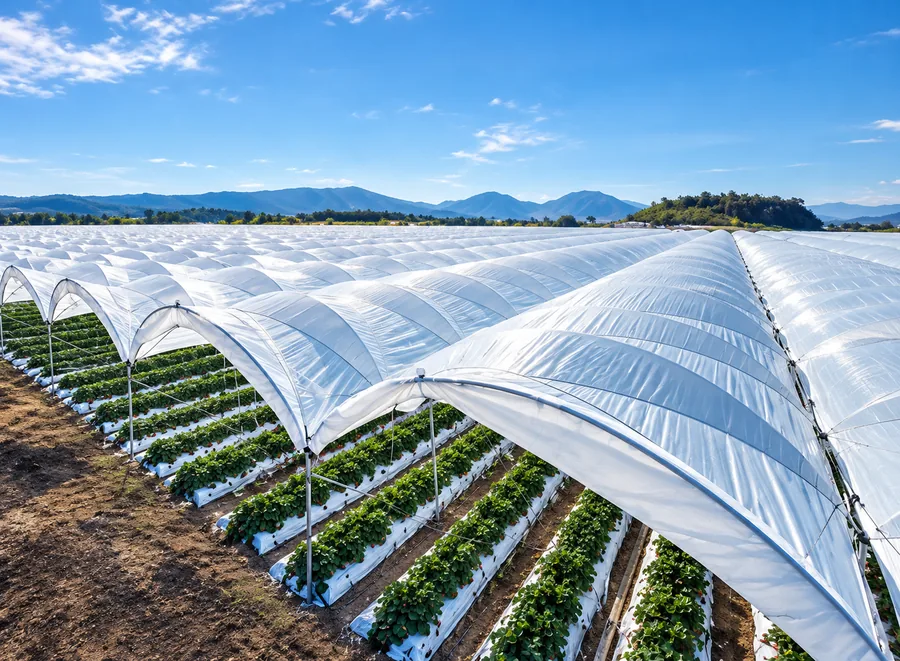
In Sonora, agricultural plastics help with three challenges: extreme heat, wind and little water. Reflective mulch film, such as white-and-black or silver-and-black, lowers soil temperature. The macro tunnel protects against winter frost and wind. The water reservoir liner makes it possible to capture and store rain.
What you need to know
- White-and-black mulch film reflects light and reduces soil heating; ICUSA's technical data sheet recommends it for areas of high radiation and high temperatures.
- The macro tunnel protects against excessive radiation, wind, heavy rain, frost and hail, according to the ICUSA catalog.
- The water reservoir liner captures rainwater and runoff to store and supply it later.
- ICUSA serves Sonora directly from its plant in Culiacán and ships to your region, so advice does not depend on traveling to the plant.
In this article
- Why does Sonora’s extreme heat change the choice of plastic?
- Which plastic to use for each challenge in Sonora?
- How does mulch film work in Sonora’s heat?
- What is a macro tunnel for in Sonora?
- When does a water reservoir liner make sense?
- How do you combine the three plastics on one plot?
- What mistakes are made with plastic in hot climates?
- Where can I buy agricultural plastics in Sonora?
Why does Sonora’s extreme heat change the choice of plastic?
Sonora combines very hot summers, winters with cold nights in the valleys, plenty of sun, frequent wind and water that has to be conserved. That mix is different from other regions of the country, and a plastic that works well in a humid, temperate zone can fall short here. Sonoran fields grow vegetables, table grapes, asparagus, citrus and grains, among other crops, and each one asks something different of the film.
The common idea is plasticulture: modifying the crop microenvironment with plastic films. Our catalog defines it as a way to protect plantings from adverse weather, pests and weeds. To see how Sonora compares with other regions, check the guide to agricultural plastics by state.
Which plastic to use for each challenge in Sonora?
| Regional challenge | Plastic that helps | What it does |
|---|---|---|
| Heat and high radiation | White-and-black or silver-and-black mulch film | Reflects sunlight and reduces soil heating. |
| Weeds | Mulch film with a black underside | Blocks light and weed germination. |
| Frost, wind, hail | Macro tunnel | Protects the crop from excessive radiation, wind, heavy rain, frost and hail. |
| Little water | Water reservoir liner | Captures and stores rainwater and runoff. |
| Soil disinfection | AgroTIF High Barrier film | Retains the gases used in disinfection. |
How does mulch film work in Sonora’s heat?
Bare soil under summer sun loses moisture quickly and can heat up enough to affect the root. Two-tone agricultural mulch film solves part of the problem. The technical data sheet states that the white side reflects sunlight to reduce soil heating and is recommended in areas of high solar radiation and high temperatures, while the black side blocks light and holds back weeds.
Silver-and-black does something similar, with the advantage that, according to the same data sheet, the reflected light helps reduce insect populations and repel pests and disease vectors. By contrast, black-and-black raises root temperature; it suits temperate or cold climates better than Sonoran heat, except for winter plantings.
Finally, with irrigation getting costlier and more limited, covered soil loses less water to evaporation, and plastic films can save 20% in water consumption; actual results vary with the crop and irrigation.
What is a macro tunnel for in Sonora?
Although Sonora is hot, its valleys have cold winter nights and occasional frosts that damage crops. There are also strong winds and isolated rains that can spoil the fruit. The agricultural macro tunnel covers the row of plants and creates a barrier. The catalog describes it as protection against excessive radiation, wind, heavy rain, frost and hail.
The film can be natural with a UV additive, diffused, anti-drip or with shading. Diffused film spreads light evenly across the whole plant, and shading blocks part of the radiation, which helps when the sun is intense. The catalog lists warranties of 1, 2 and 3 years for natural UV film, depending on the specification. Macro tunnels also make it possible to advance or extend the cycle and harvest outside the traditional season.
When does a water reservoir liner make sense?
In areas with scarce but concentrated rainfall, or with seasonal runoff, it is worth making use of what falls. The water reservoir liner goes in a depression in the ground, adapted to capture rainwater and runoff. The catalog presents it as a way to capture, store and supply water. For the grower, it means having a reserve that complements the well or canal, especially during the part of the year when water is scarce. You can see how it is used in other regions in the article on saving water in La Laguna.
How do you combine the three plastics on one plot?
There is no single recipe, but there is a logical order. First think about water and decide whether it needs to be stored. Then, on the planting bed, choose the mulch film color according to the transplant date and the pests the field has had. Finally, if the crop is sensitive to frost, wind or radiation, add the macro tunnel. If the field has a history of fungus or nematode problems, you can disinfect first with High Barrier film. In another article we compare this with mulch film in Sinaloa, a neighboring state with a similar vegetable cycle.
What mistakes are made with plastic in hot climates?
- Choosing the color out of habit. A black-and-black film in the middle of September heats the root when the goal is to cool it.
- Ignoring the wind. A loose installation or poorly covered edges lift and tear before their time.
- Leaving the macro tunnel without ventilation. In strong sun, a closed structure builds up heat; you have to manage the sides and the schedules.
- Ordering without consulting about the crop. Each film is matched to a crop, a cycle and an irrigation method.
Where can I buy agricultural plastics in Sonora?
At ICUSA we serve Sonora directly from our plant in Culiacán, Sinaloa, and we ship to your region. If you want to talk to someone at the factory, message one of our ICUSA advisors on WhatsApp at 667 791 3171 or through the contact page, with your crop, approximate acreage and planting season, and they will guide you on mulch film, macro tunnel or water reservoir liner.
Products mentioned
Frequently asked questions
Which mulch film suits Sonora's heat?
Two-tone mulch film with the white or silver face up. According to ICUSA's technical data sheet, white reflects light and reduces soil heating, and it is recommended in areas of high solar radiation and high temperatures.
Do macro tunnels work in such a hot climate?
Yes, because winters bring cold nights, frost and wind, and strong radiation is present in any season. Macro tunnel film can be diffused or shaded to spread and reduce light, depending on the crop.
How much water can plastic save?
According to ICUSA, plastic films can save 20% in water consumption in agriculture. Actual results depend on the crop, irrigation and management.
What is a water reservoir liner for?
To capture and store rainwater and runoff in a depression in the ground adapted with plastic. It gives you a water reserve available when you need it, without depending only on a well or canal.
Does ICUSA sell in Sonora?
Yes. ICUSA serves Sonora directly from its plant in Culiacán. You can also message an advisor on WhatsApp to get a quote or resolve technical questions.
Growing in Sonora? An advisor will tell you which plastic suits your crop.
Tell us your crop, acreage and planting date. We reply on WhatsApp during office hours.
Keep reading
6 min read
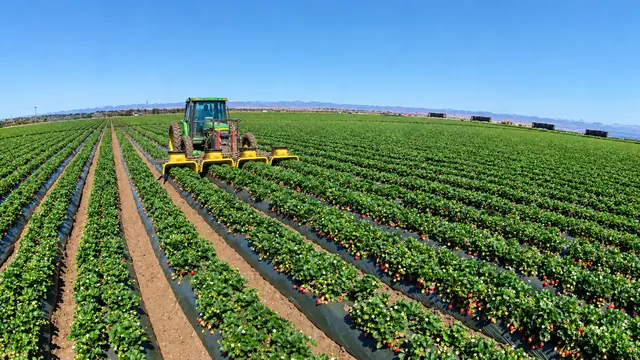
Agricultural Plastics by State: A Guide for Growers
A clear map of which agricultural plastic fits each region of Mexico, from mulch film in Sinaloa to the water reservoir liner in Zacatecas.
Read the guide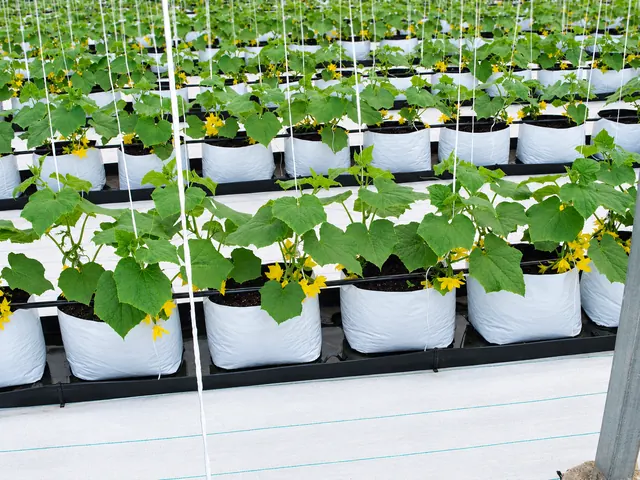
6 min read
Plastics for Vegetables in Guanajuato: Bajío Guide
Which agricultural plastic to use on Bajío vegetables: mulch film by color and season, greenhouse ground cover and hydroponic grow bags.
Read the guide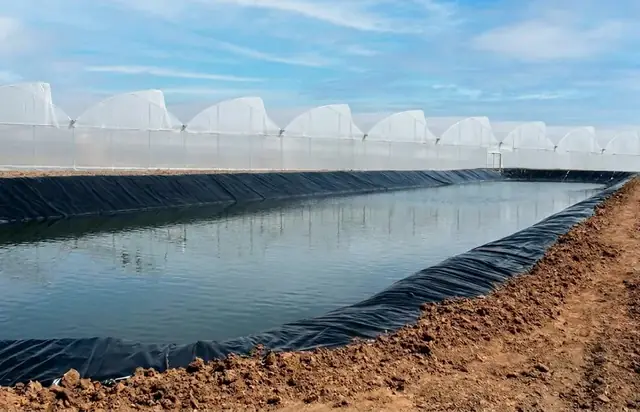
6 min read
Water Reservoir Liner in Zacatecas: Capture Rain
How to capture and store rain with a water reservoir liner on rainfed farms in Zacatecas, and why it pairs well with mulch film.
Read the guide