Macro Tunnels for Berries in Baja California
How macro tunnels are used for strawberries and berries in San Quintín and the Baja California valleys, and which film and mulch film to combine.
The short answer
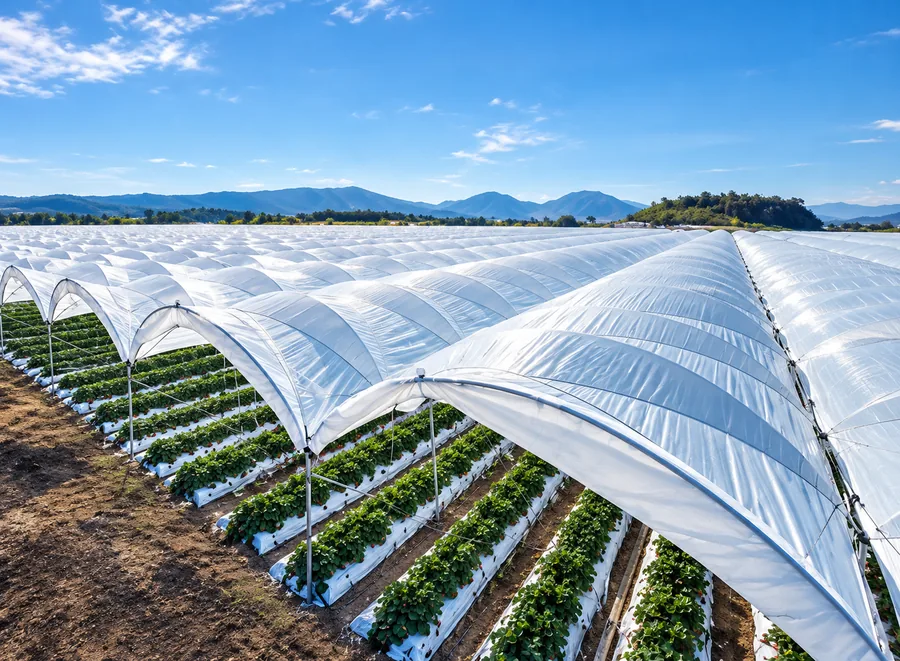
In Baja California berries, the macro tunnel protects strawberries, raspberries and blackberries from rain, wind, cold and excess radiation. Growers choose a UV-additive, diffused or anti-drip film depending on the crop, and combine it with mulch film, which for strawberries is usually green. The right film depends on the crop cycle and the area.
What you need to know
- The macro tunnel protects against excessive radiation, wind, heavy rain, frost and hail, according to the ICUSA catalog.
- Films can be natural UV, diffused, anti-drip or shade; the natural UV film has a 1, 2 and 3 year warranty according to the technical data sheet.
- For strawberries, the ICUSA technical data sheet recommends green-on-green mulch film.
- In Baja California, ICUSA has a presence and serves growers directly from Culiacán: quotes are handled through direct contact.
In this article
- Why are macro tunnels used for berries in Baja California?
- Does the film change between the coast and the valleys?
- Which macro tunnel film works best for berries?
- What mulch film goes under the macro tunnel?
- When should you disinfect the soil before planting?
- What should you watch for when installing the macro tunnel?
- What information should you have on hand to get a quote?
- Who serves Baja California?
Why are macro tunnels used for berries in Baja California?
Baja California is one of the most important berry regions in Mexico. In the San Quintín Valley and other coastal areas, growers produce strawberries, raspberries, blackberries and blueberries, and much of that fruit goes to markets that demand consistent quality and clean fruit. The coastal climate is cool, with fog and cold nights, and at certain times of year there is rain, wind and days of intense sun. Delicate fruit needs protection from those conditions.
The agricultural macro tunnel is a structure of arches covered with plastic film that is placed over the crop beds. Our catalog states that it protects the crop from excessive radiation, wind, heavy rain, frost and hail. For fresh-market fruit, avoiding water and wind damage means avoiding quality losses. It also lets you bring the harvest closer to periods with better prices, depending on the grower’s planning.
If you want to compare with other regions, see the guide to agricultural plastics by state.
Does the film change between the coast and the valleys?
Yes, because the environment is not the same. On the coastal strip, such as San Quintín, the challenge is usually humidity, fog, wind and cool nights: anti-drip film, tear resistance and good light transmission carry the most weight there. In the valleys farther from the sea, the contrast between day and night is sharper and the sun hits harder at certain times of year, so shading or diffused light matters more. These are not rigid rules: they are criteria to start the conversation with the advisor, who needs to know your field.
Which macro tunnel film works best for berries?
| Film | What it does according to the technical data sheet | When it is considered for berries |
|---|---|---|
| Natural UV | Excellent total light transmittance with UV additive. 1, 2 and 3 year warranty. | When the goal is to make the most of the available light in the cool season. |
| Diffused | Spreads light evenly to all levels of the plant; promotes growth and fruit quality. | Dense-foliage crops, where direct light leaves shaded areas. |
| Anti-drip | Prevents dripping and helps condensed water run off the inner face. | Foggy, humid climates, where drops falling on the fruit favor disease. |
| Shade | Blocks a percentage of light with additives and pigments. | High-radiation periods, to prevent fruit burn. |
You do not have to pick just one. Depending on the crop and the season, the advisor may propose a film that combines properties. What matters is to provide the real data for your area: location, structure height, bed orientation and planting date.
What mulch film goes under the macro tunnel?
The macro tunnel protects from above; the agricultural mulch film works from the ground. For strawberries, the technical data sheet recommends green-on-green mulch film, which warms the soil around the roots and lets through visible radiation in the green range. For other berries, the combination depends on soil temperature and weed pressure. In general:
- Green on green: recommended by the technical data sheet for strawberries.
- Black on black: controls weeds very well and warms the root zone; recommended in mild or cold climates, which is what you get on the coast.
- Black on white: reflects light and lowers soil temperature; more useful in seasons or areas with high radiation.
In addition, mulch film keeps the fruit off the soil, which helps keep it clean, and it makes water and nutrient use more efficient under drip irrigation.
When should you disinfect the soil before planting?
In berries, where the fruit is delicate and the crop is intensive, soil pathogens are a real concern. When fumigating before planting, the film must retain the gases. AgroTIF High Barrier film is designed for that: the technical data sheet describes it as a near-absolute barrier against oxygen, which improves pesticide retention. In the article on soil disinfection with AgroTIF we explain when it makes sense and when it does not.
What should you watch for when installing the macro tunnel?
Structure and tensioning
The film must be well tensioned and firmly fixed on the arches, because coastal wind shakes it and wears it down. Loose plastic tears and collects water.
Ventilation
A closed structure builds up heat and humidity as soon as the sun comes out. Open or lift the sides during the hottest hours and close them at night.
Mechanical strength
The catalog explains that mechanical properties, such as tear resistance, dart impact, breaking strength and elongation, determine how much a film can take. Ask your advisor for the properties of the film you are offered, not just the price per roll.
What information should you have on hand to get a quote?
- Crop and variety, and whether it is a new planting or a cover replacement.
- Width and length of the macro tunnel, and arch height.
- Planting date and expected harvest date.
- Whether you already have mulch film or also need it.
- Problems you want to solve: rain, cold, wind, excess sun or dripping.
Who serves Baja California?
ICUSA has a presence in Baja California and serves you directly from its plant in Culiacán, Sinaloa. The most direct route is to contact ICUSA. Message an advisor on WhatsApp at 667 791 3171, tell them your crop, your area and the type of structure, and you will get a recommendation. If your region is different, you may also find the article on greenhouses and macro tunnels in Jalisco useful, another strong berry region.
Products mentioned
Frequently asked questions
What does a macro tunnel protect in strawberries?
According to the ICUSA catalog, it protects against excessive radiation, wind, heavy rain, frost and hail. In strawberries, that means less damage to fruit and flowers and a more stable cycle.
Which mulch film is recommended for strawberries?
The ICUSA technical data sheet recommends green-on-green mulch film for strawberries. It warms the soil around the roots and lets through visible radiation in the green range.
How many years does macro tunnel film last?
The natural UV film has a 1, 2 and 3 year warranty, according to the ICUSA technical data sheet. Actual lifespan depends on the type of film, the climate, the wind and how it is managed.
Is anti-drip film a good idea in foggy areas?
It is an option worth considering. Anti-drip film keeps condensed water from dripping onto the plants and helps it run off the inner face. An advisor can help you decide based on your crop.
Does ICUSA serve Baja California?
ICUSA has a presence in Baja California and serves growers directly from its plant in Culiacán. To get a quote, write through the contact page or message an advisor on WhatsApp.
Growing in Baja California? An advisor will tell you which plastic suits your crop.
Tell us your crop, acreage and planting date. We reply on WhatsApp during office hours.
Keep reading
6 min read
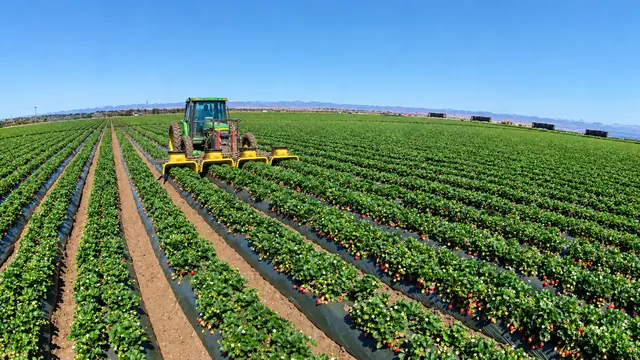
Agricultural Plastics by State: A Guide for Growers
A clear map of which agricultural plastic fits each region of Mexico, from mulch film in Sinaloa to the water reservoir liner in Zacatecas.
Read the guide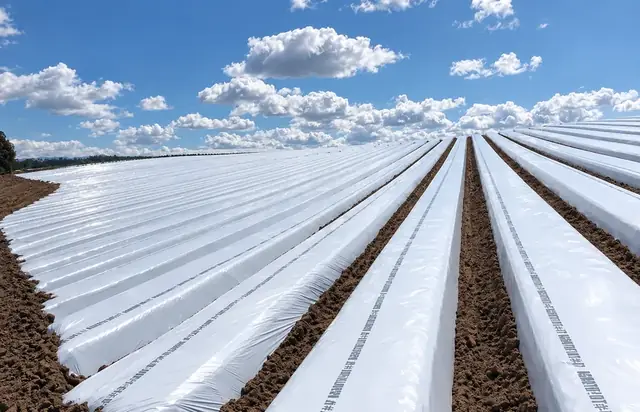
6 min read
AgroTIF Film: What It Is and When to Use It on Soil
AgroTIF is a high barrier film that retains soil disinfection gases. Here is when it makes sense and how it differs from solarization.
Read the guide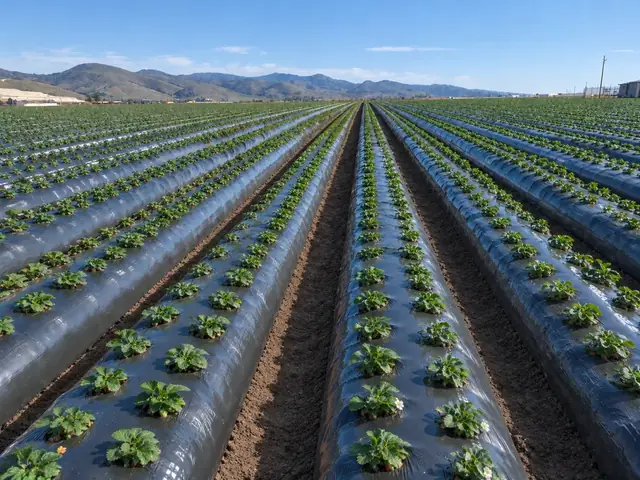
6 min read
5 Benefits of Plastic Mulch Film in Berry Crops
The 5 benefits of plastic mulch film for strawberries and berries: water use, weed control, soil temperature, cleaner fruit and pest management.
Read the guide