Mulch Film in Sinaloa: Choosing Color and Gauge
Which mulch film color suits Sinaloa vegetables, how to choose gauge by crop cycle length and which perforation to use with drip irrigation.
The short answer
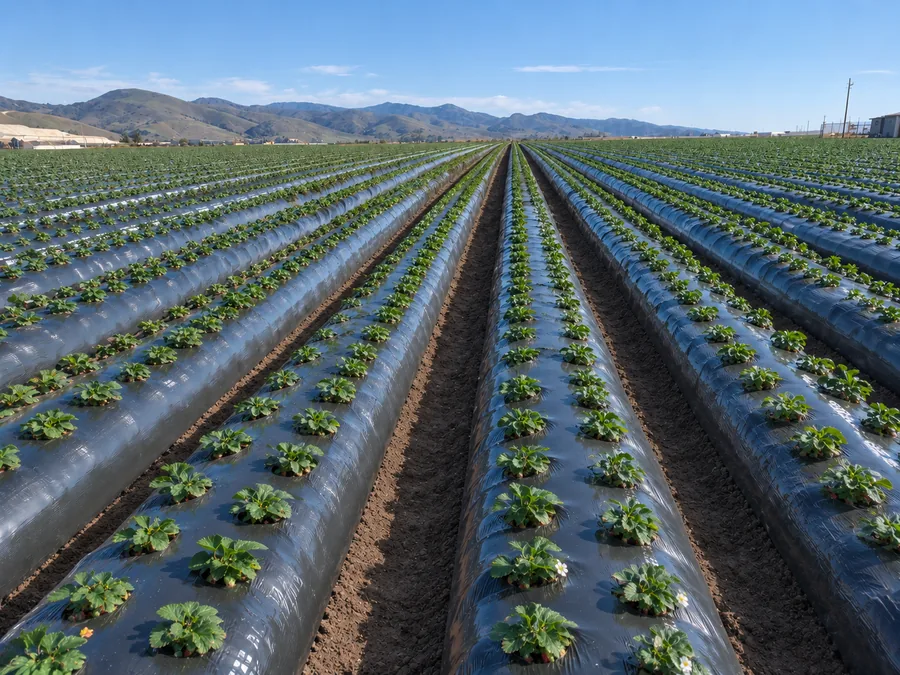
For Sinaloa vegetables, mulch film is chosen based on the heat at transplant and pest pressure. The black and white bicolor cools the soil in early plantings, silver and black helps repel insects, and black and black warms the root zone. ICUSA mulch film ranges from gauge 70 to gauge 200, and the gauge depends on how long the crop cycle lasts.
What you need to know
- Color changes soil temperature and light reflection: in warm fall plantings, black and white or silver and black make sense.
- ICUSA mulch film ranges from gauge 70 to gauge 200, and the gauge is decided by cycle length and laying method: long cycles like tomato or eggplant call for more film than a short-cycle cucumber.
- According to the ICUSA technical data sheet, mulch film lasts up to 2 years, depending on the crop, gauge and use.
- The perforation (center, staggered, domino, three rows or multi-perforated) must match planting density and irrigation.
In this article
- Why is mulch film used on Sinaloa vegetables?
- Which mulch film color works best in Sinaloa?
- How do you choose the gauge of mulch film?
- What works for tomato, chile, cucumber and eggplant?
- What perforation does mulch film need?
- What should you watch for when laying mulch film?
- And if the soil has to be disinfected first?
- Where can you get mulch film in Sinaloa?
Why is mulch film used on Sinaloa vegetables?
Sinaloa grows vegetables mainly in the fall-winter cycle, with valleys as important as those of Culiacán, Navolato, Guasave and Ahome. Seeding or transplanting starts in September and October, when the soil is still warm and the sun is strong, and harvest takes place in the cold, dry months. In that rhythm, agricultural mulch film does three jobs that growers feel in their pocket.
The co-extruded film makes water and nutrient use more efficient, controls weeds and changes soil temperature. With drip irrigation, the covered bed loses less moisture to evaporation and fertilizer reaches the root zone better. In addition, the fruit stays separated from the soil, which helps keep it cleaner.
ICUSA manufactures these films at our plant and laboratory in Culiacán, in the heart of one of the country’s most important agricultural areas. For the national picture, see the guide to agricultural plastics by state.
Which mulch film color works best in Sinaloa?
Color is not decoration: it defines how much light is reflected, how much the soil heats up and how insects react.
| Color | Effect | When it makes sense in Sinaloa |
|---|---|---|
| Black / White | Reflects light and reduces soil heating; prevents weed germination. | September and October transplants, with high radiation and warm soil. |
| Black / Silver | Reflects light, helps control temperature and repels pests and disease vectors. | Fields with a history of whitefly or aphids, which transmit viruses. |
| Black / Black | Excellent weed control; raises the temperature in the root zone and brings harvest forward. | Plantings in cold months or in fields where earliness is the goal and the soil is slow to warm up. |
| Natural / AgroTIF High Barrier | Film for soil disinfection and gas retention. | Before planting, when the bed is fumigated (see below). |
The practical rule: if the problem is heat, reflect the light; if the problem is virus, confuse the insect; if the problem is cold, retain heat. Each field may call for something different.
How do you choose the gauge of mulch film?
Gauge is the thickness of the film, and ICUSA mulch film ranges from gauge 70 to gauge 200. There is no magic number, because it depends on three things:
- Cycle length. Tomato, eggplant and long-harvest chiles need a film that withstands months of sun, irrigation and crew work. A short-cycle cucumber does not demand the same.
- Laying method. Mechanical laying stretches the plastic; a very thin film tears more easily in loose soil or soil with clods.
- Wind and handling. In open fields without windbreaks, wind lifts the edges if the film is too light.
The maximum life of mulch film is 2 years, depending on the crop, gauge and use. In practice, almost all vegetable mulch film is removed at the end of the cycle; what matters is that it lasts intact until the final harvest. A technical advisor can review your crop and help you choose within that range, from gauge 70 to gauge 200.
What works for tomato, chile, cucumber and eggplant?
Tomato
Long cycle, staked plants and a lot of foot traffic from workers. You look for a tear-resistant film and a color that controls soil temperature at transplant; the black and white bicolor is the usual choice for warm plantings.
Chile
Very sensitive to insect-transmitted viruses. Silver and black makes sense when there is whitefly or aphid pressure, together with whitefly monitoring using yellow sticky insect traps.
Cucumber
Shorter cycle and a creeping plant that quickly covers the bed. Here weed control and fruit cleanliness matter more than a long-life film.
Eggplant
Long cycle and sustained heat. It is handled much like tomato: a color that reflects and a gauge that lasts the whole season.
What perforation does mulch film need?
Perforation and pre-perforation patterns: center, staggered, domino, three rows and multi-perforated. The pattern is chosen based on plant spacing, number of rows per bed and type of irrigation. Poor perforation forces you to punch holes by hand and breaks crop uniformity, so it is best to define it before ordering the roll.
What should you watch for when laying mulch film?
A good material is wasted by poor laying. Before covering, the bed should be well formed, firm and at the right moisture; the drip tape goes under the film, not on top. The plastic is stretched without forcing it, and the edges are covered evenly with soil so the wind does not lift it. At the end of the cycle it is best to remove it completely so no residue is left in the field. If the mulch film arrives with quality doubts or a factory defect, review the warranty and replacement policy.
And if the soil has to be disinfected first?
When the bed is fumigated before planting, the film must retain the gas. That is where the AgroTIF High Barrier film comes in, which the technical data sheet describes as an almost absolute barrier against oxygen and which improves pesticide retention. We explain when it makes sense in this article on soil disinfection.
Where can you get mulch film in Sinaloa?
ICUSA serves you directly from its plant in Culiacán, Sinaloa, and ships to your region. To get a quote, message an ICUSA advisor on WhatsApp at 667 791 3171, tell them your crop, planting date and irrigation method, and receive a recommendation for color, gauge and perforation.
Products mentioned
Frequently asked questions
Which mulch film color is best for tomato in Sinaloa?
It depends on the transplant date. In September and October, with warm soil, the black and white bicolor helps lower bed temperature. If there is whitefly pressure, silver and black is an alternative. An advisor can fine-tune the decision with your calendar.
How long does agricultural mulch film last?
According to the ICUSA technical data sheet, the maximum life is 2 years, depending on the crop, gauge and use. On vegetables it is normally used for one cycle and removed when harvest ends.
Is thicker gauge always better?
Not necessarily. A short-cycle crop does not need the same film as a long-cycle one. The recommendation is to choose the gauge based on crop length, laying method and field wind. ICUSA mulch film is offered from gauge 70 to gauge 200.
Can the same mulch film be used for all crops on the farm?
It can, but it is rarely ideal. Cucumber, tomato and chile have different cycles and risks. It is common for one operation to use more than one color and gauge combination depending on the field and date.
Does ICUSA serve Sinaloa?
Yes. ICUSA has its plant in Culiacán and serves Sinaloa growers directly. You can message an advisor on WhatsApp or use the contact page.
Growing in Sinaloa? An advisor will tell you which plastic suits your crop.
Tell us your crop, acreage and planting date. We reply on WhatsApp during office hours.
Keep reading
6 min read
Agricultural Plastics by State: A Guide for Growers
A clear map of which agricultural plastic fits each region of Mexico, from mulch film in Sinaloa to the water reservoir liner in Zacatecas.
Read the guide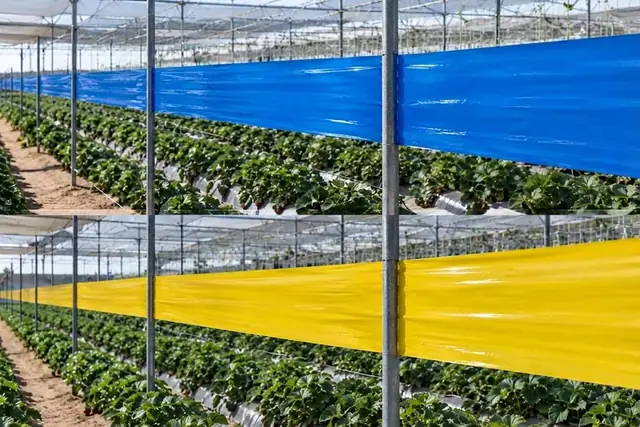
6 min read
Blue and Yellow Sticky Traps: Greenhouse and Field Use
Blue and yellow sticky traps help monitor and reduce insects. Here is what each color attracts or repels and how to place them.
Read the guide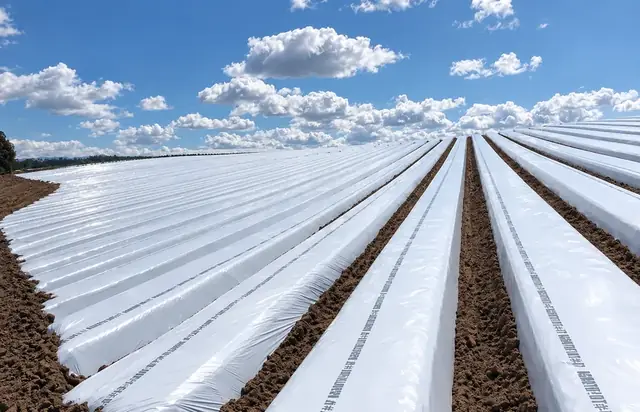
6 min read
AgroTIF Film: What It Is and When to Use It on Soil
AgroTIF is a high barrier film that retains soil disinfection gases. Here is when it makes sense and how it differs from solarization.
Read the guide